
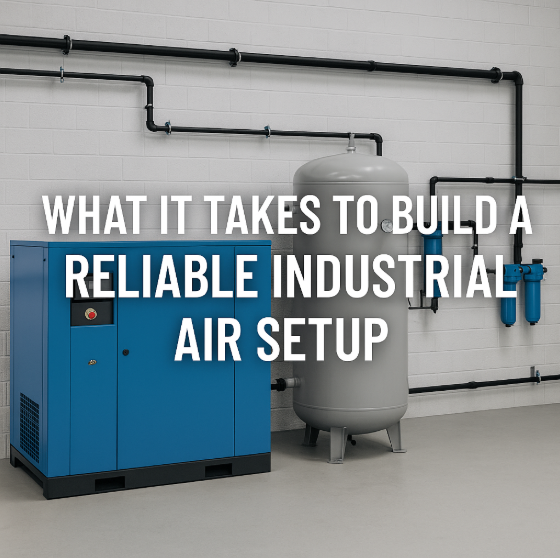
What It Takes to Build a Reliable Industrial Air Setup

Establishing a solid industrial air system is a lot like establishing the nervous system for your business: it needs to be efficient, sensitive, and able to handle frequent demands. Compressed air powers everything from tools to automated lines, whether you’re in manufacturing, automobile service, or food processing. But merely buying the biggest machine on the market isn’t enough to make an air setup that won’t break down, overheat, or raise your utility bills.
In my early days managing a fabrication shop, we made the mistake of going cheap and basic. The result? Inconsistent airflow, overheated equipment, and downtime that cost us jobs. Lesson learned: building a smart industrial air setup is about long-term thinking and precise planning.
Table of Contents
Know Your Air Demand—And Plan for Growth
The first step in building a reliable air system is understanding your actual air demand. It’s tempting to estimate, but guesswork leads to two costly outcomes: overbuying (wasting capital) or underbuying (causing system failures).
Audit your tools, machines, and processes. What’s their cubic feet per minute (CFM) requirement? How often do they run? Factor in any seasonal spikes or future expansion plans. It’s always wise to build in a 15–20% buffer.
Also, consider duty cycles. Some operations need constant airflow (100% duty cycle), while others work in intervals. Matching this need with the right compressor technology is key.
Choosing the Right Compressor Type
There are several types of air compressors, but for industrial reliability and continuous use, rotary screw compressors are the gold standard. They provide a steady stream of compressed air, are energy efficient, and run quietly compared to piston models.
One of the most trusted sources for rotary screw air compressors is Mac-Air. Their range of equipment fits a variety of industries and sizes, giving you flexibility in design without sacrificing dependability.
Rotary screw compressors are reliable not only because they work well, but also because they last a long time. These devices can last for decades with the right care, which means they are an investment, not simply a buy.
System Design and Layout Matter
The compressor isn’t the only thing that matters. The materials used (steel, copper, aluminum), the way your air lines are routed, and the positioning of your equipment all affect how well your system works.
Don’t make steep turns in pipes, because they make the pressure drop. When you can, use loop systems to keep the air pressure in the building even. To protect water and dirt from hurting tools or items, put in moisture traps and filters.
Also, make sure that your compressor has enough air flow around it. One of the most common reasons compressed air systems fail is that they get too hot.
Don’t Skip on Maintenance Infrastructure
Reliability doesn’t end with installation—it’s a continuing process. Build a preventive maintenance schedule into your operational SOPs. This includes:
- Changing filters regularly
- Monitoring oil levels and leaks
- Draining condensate from tanks
- Checking for pressure inconsistencies
You can get a warning before a small problem becomes a huge one by putting in monitoring systems or smart controllers.
Working with trusted suppliers like josefgases.com can give you more than just parts—they often provide maintenance support, installation services, and expert advice tailored to your facility’s unique needs.
Budgeting for Reliability
We all want the best tools, but money problems are real. That’s why it’s so important to make smart budgets. Don’t just think about the initial price. Think about the whole cost of ownership, which includes things like energy use, maintenance, and possible downtime charges.
Short-term financing might help you upgrade without having to wait too long when cash flow is tight but you need to make an investment right away.
Options like 24/7 loans online can offer quick access to capital to keep your upgrades on schedule. These solutions are especially helpful for small to mid-sized businesses that need to move fast when equipment starts failing.
Just be sure to evaluate the terms carefully and match the repayment schedule with your projected ROI.
Real-World Experience: The 2 A.M. Compressor Breakdown
I remember one night, around 2 a.m., when our compressor stopped working when we were printing a lot of stuff for a manufacturing client. Everything came to a stop. We rushed around looking for the problem, only to find that a worn belt and a blocked air filter had pushed the system above its limit.
We had to pay an emergency fee to have a technician to come out. The task was late, the client was angry, and our team was tired. Next, we added automated alarms, changed our maintenance logs, and made sure there were backups so that there wouldn’t be any single points of failure.
That event showed me that being reliable isn’t a matter of luck; it’s a matter of being ready.
Final Thoughts
It’s not enough to just have a powerful compressor for a good industrial air setup. You also need to make sure that every item, from the filter to the budget, functions well with the others.
Plan ahead. Plan your budget well. Pick good tools. And most importantly, make sure you keep up with maintenance like your business depends on it, because it does.